
The Pitt
A medical drama that gets everything right

Medical shows, if not written well, can be quite cheesy and predictable. When you watch a show, the characters, of course, matter, but what's crucial is also the writing. When you had a show like 'HOUSE M.D' especially when it first started, it dwelled on cases that were so medically shocking, but you wanted to know a diagnosis as the cases were all so fascinating. 'Grey’s Anatomy' had some of that in the beginning but then divulged too much into Meredith’s life, which became a little painful to watch.
Now, when we take a show like 'E.R', it transcended into a genre which you wouldn’t think would be very interesting. It dealt with medical as well as personal lives, but didn’t stuff your head with nonsense like some other shows. ER was a show unlike any other. It had a great cast with unbelievable chemistry. The writing was exemplary beyond recognition, and episodes were just emotional rollercoasters (in a good way). It wasn’t until 2024 that a show called 'The Pitt' was released, and I have been glued to my screen through this viewing process - and keeping in mind - the season has just hit the halfway point, so I’m writing this review as the show is still on air.
The Pitt follows a bunch of emergency department doctors on a 15-hour shift. Each episode follows one hour of the shift starting at 7:00 a.m. The doctor in-charge Dr. Michael "Robby" Robinavitch - played by Noah Wyle - is not only someone who has to deal with his team but is also reeling from his experiences from COVID-19 as he lost his mentor during that time.
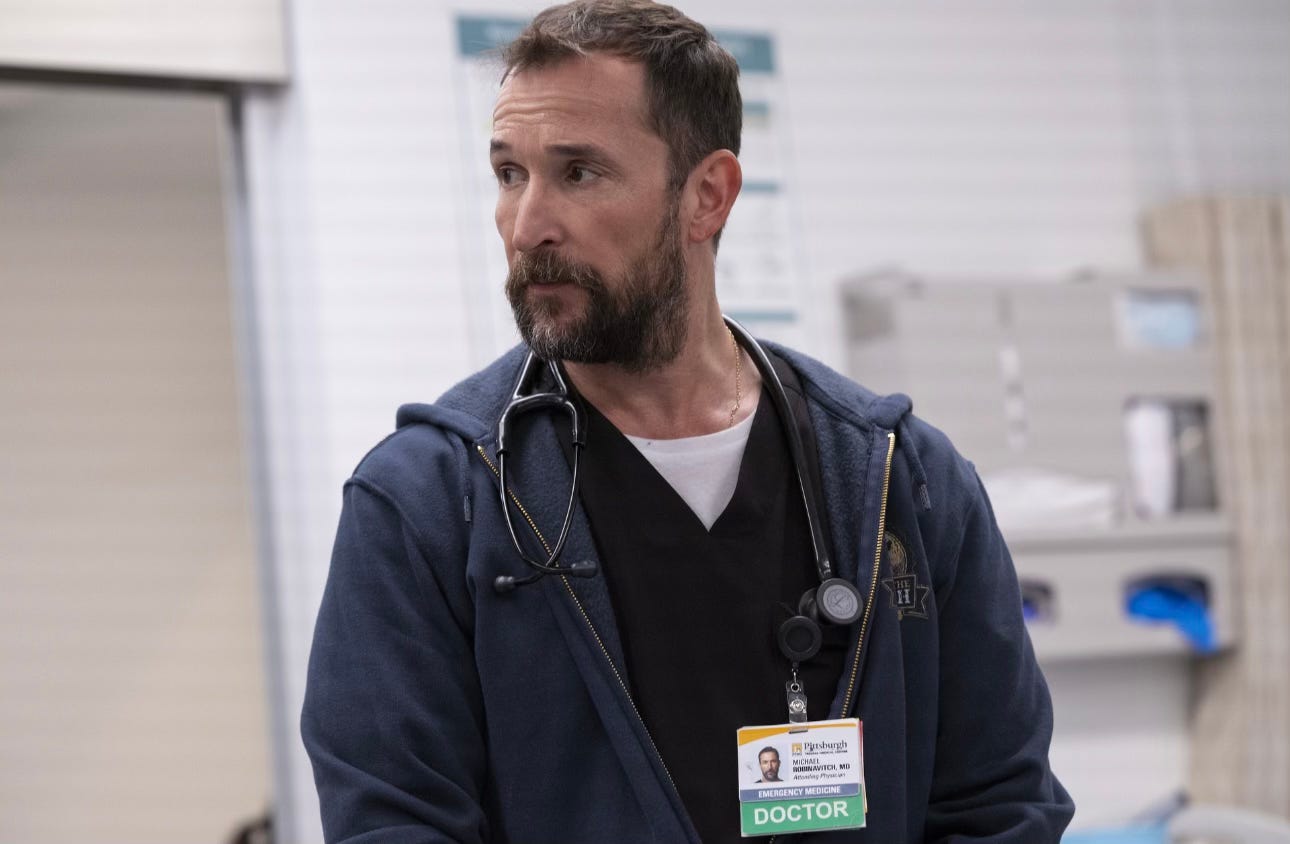
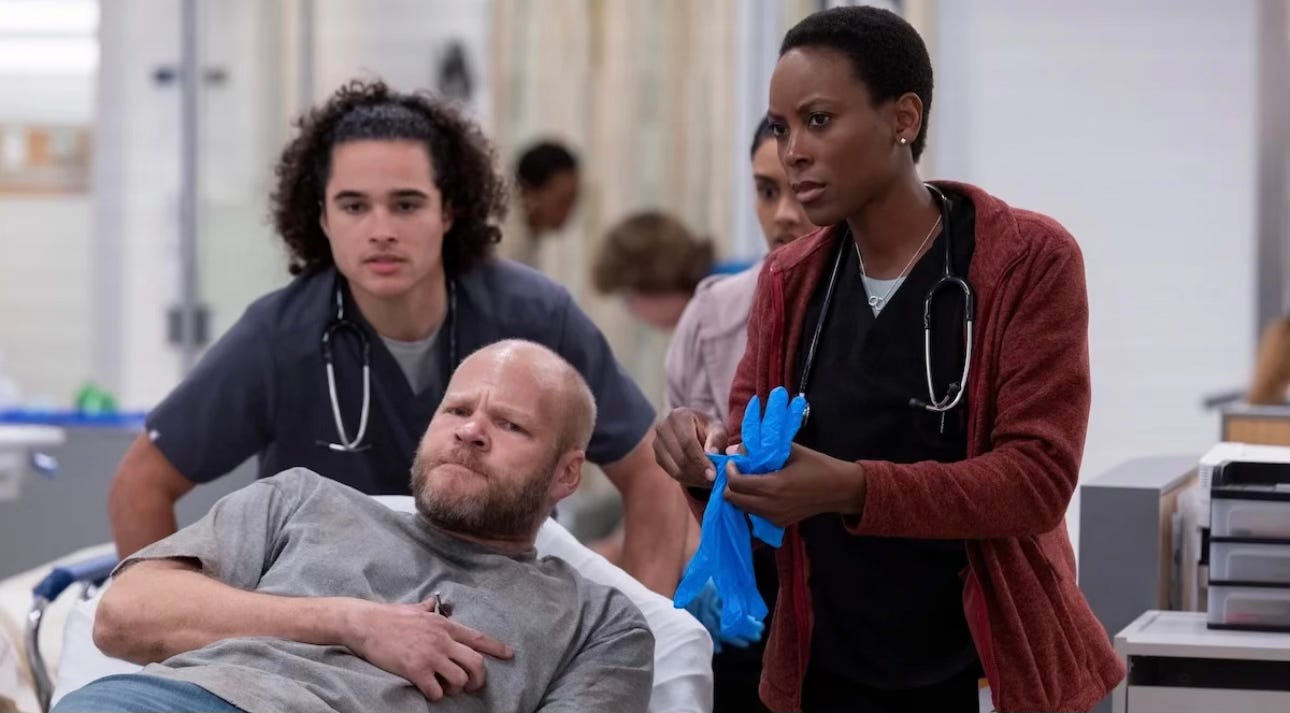
Dr. Robby briefs his doctors on what needs to be done for the day and instructs his senior residents, Dr. Collins and Dr. Langdon, to teach his new interns and students and explains the ways of medicine. The doctors under his wing are some of the most intense but also the most real. Guess you have to be like that to deal with everyday experiences like trauma.
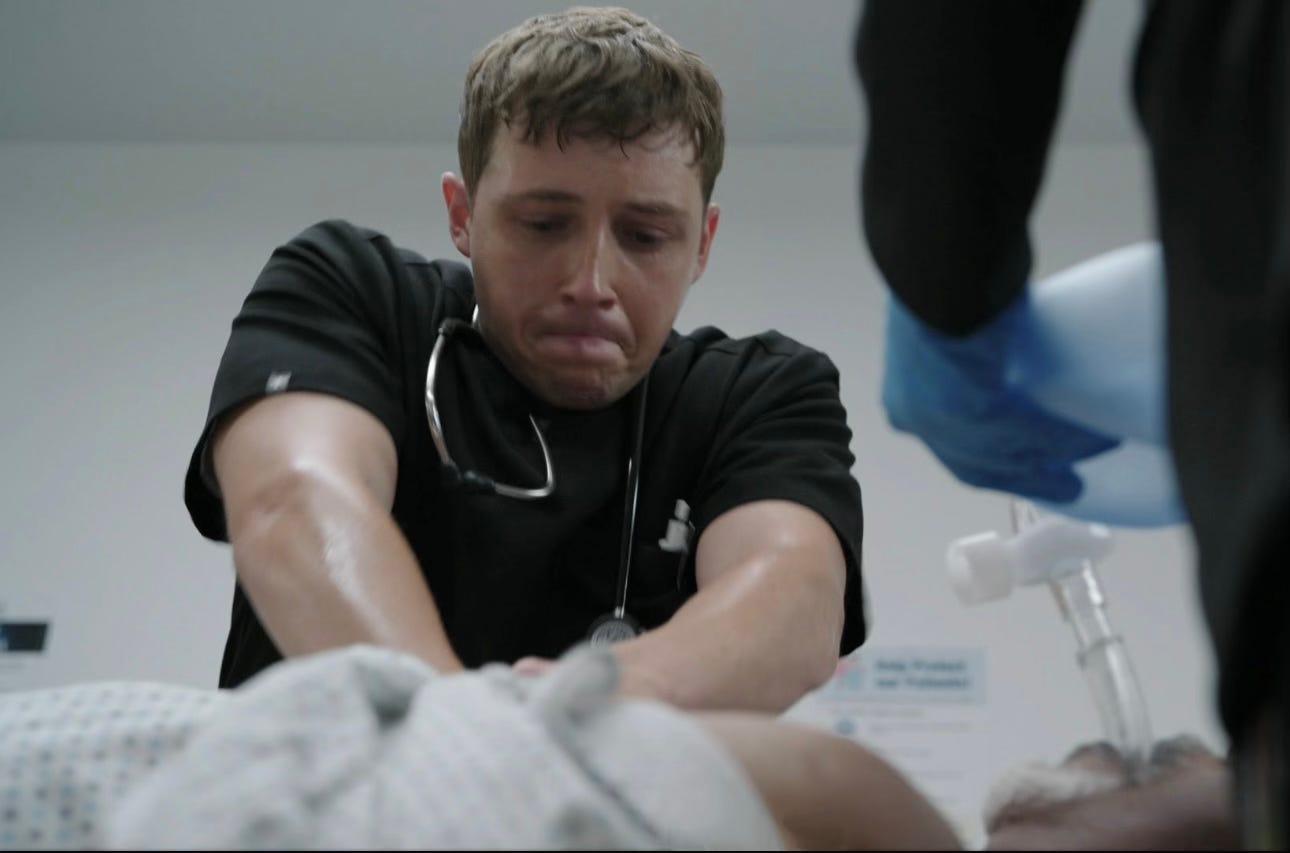
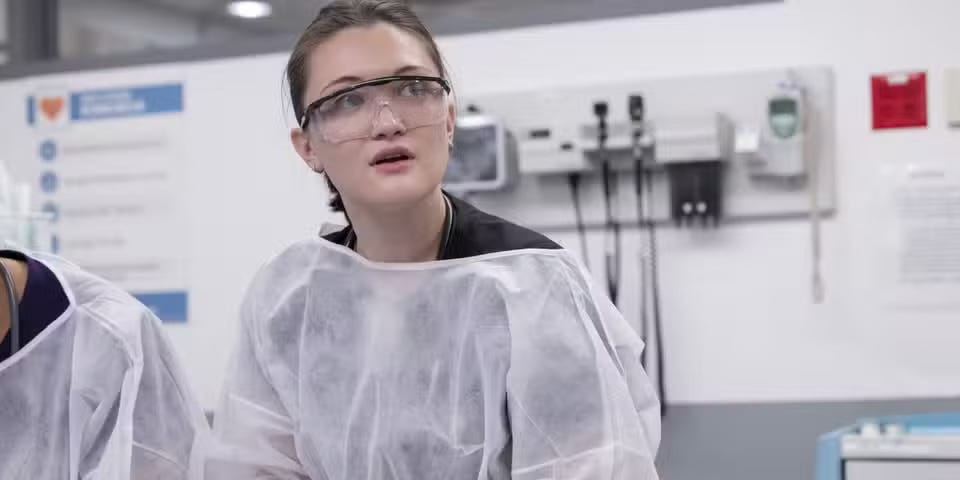
The cases that have been showcased on the show are so close to reality, that even the medical fraternity has deemed the show as the most authentic one so far. The supporting cast of actors who play patients or family members are just so good that there are moments which are very emotional and hard-hitting that you feel really bad and sad for them. But that’s just what you get with outstanding writing. R. Scott Gemmill- the show runner - has written each episode very meticulously that builds every character and every story. This is also a reunion of fellow E.R. producer and writer John Wells, who, of course, is involved in this masterpiece.
Noah Wyle, we have missed you and please continue to be a part of our tv lives. Amen.
Media Review: The Pitt (HBO Max)
Media Type: TV Show / Medical Drama
Network: HBO Max
Release Date: January 2025
Summary: The Pitt follows the emergency department staff at Pittsburgh Trauma Medical Center during intense 15-hour shifts, portraying the emotional, ethical, and physical pressures faced by healthcare workers in a post-pandemic world. The series unfolds in near real-time, allowing viewers to experience the relentless pace and emotional weight of trauma care alongside the characters.
Balance
The Pitt demonstrates balance by showing both the high-pressure stress and the moments of compassion and teamwork within the emergency department. For example, in Episode 3, Dr. Robinavitch struggles to save a critically injured patient from a car accident but pauses to console the patient’s mother in the hallway before returning to the trauma bay. This illustrates the importance of balancing professional responsibility with human empathy. Dr. Eugene Gan writes that media should “promote balance so that audiences see a realistic and constructive picture of life” (Gan, Infinite Bandwidth, p. 34). Importantly, the show does not portray medicine as constant success; it also depicts exhaustion, moral doubt, and the limits of human ability, offering a fuller and more realistic picture of vocation.
Attitude Awareness
The show fosters attitude awareness by illustrating how repeated exposure to trauma shapes the staff’s emotional responses. Nurses express frustration with chronic understaffing, while doctors wrestle with ethical dilemmas in life-or-death situations. In Episode 5, after losing a patient during surgery, a physician states, “We can’t save everyone, but we have to keep trying.” Gan emphasizes that viewers must examine how media influences habits and emotional patterns (Gan, Infinite Bandwidth, p. 48). This line reflects perseverance rather than hopelessness; it acknowledges human limitation while affirming moral responsibility. The show invites viewers to reflect on whether repeated exposure to suffering leads to compassion fatigue or deeper commitment to serve.
The Dignity of the Human Person
The Pitt consistently upholds human dignity by portraying patients and staff as complex individuals rather than medical cases. In Episode 4, a homeless patient with a chronic illness expresses frustration at feeling like “just another chart,” and the attending physician takes extra time to learn his name and story before treatment begins. Gan stresses that media should never reduce persons to stereotypes (Gan, Infinite Bandwidth, p. 52). The series also depicts the dignity of the elderly, uninsured, and those struggling with addiction, reinforcing the biblical truth that every person is made in the image of God (Genesis 1:27).
Truth-Filled
The series is truth-filled in its realistic depiction of hospital life and ethical dilemmas. In Episode 6, a young patient does not survive despite the team’s best efforts, and the episode ends not with dramatic music but with quiet grief among the staff. This reflects real-world consequences rather than sensationalized storytelling. Gan writes that media must “conform to reality rather than distort it” (Gan, Infinite Bandwidth, p. 68). By portraying loss, burnout, and imperfect outcomes, the show reflects the broken yet hopeful reality of the human condition.
Inspiring
Although the show portrays intense crises, it inspires through courage and self-giving service. In Episode 7, Dr. Robinavitch remains after his shift to sit with a grieving family, demonstrating compassion beyond obligation. Gan explains that good media should point beyond itself toward virtue (Gan, Infinite Bandwidth, p. 84). These quiet acts of sacrifice echo Christ-like service, showing that greatness is found not in recognition but in faithful care for others.
Skillfully Developed
The Pitt is skillfully developed through careful writing, realistic pacing, and immersive cinematography. Split-screen sequences highlight simultaneous emergencies, emphasizing the constant pressure of the ER. Gan argues that media must be skillfully crafted to communicate truth effectively (Gan, Infinite Bandwidth, p. 113). The handheld camera work and natural lighting enhance authenticity, making the environment feel immediate and emotionally engaging rather than overly dramatized.
Motivated and Relevant to Experience
The show is motivated by real-world experience and resonates with viewers familiar with high-pressure environments. By portraying sleep deprivation, ethical conflict, teamwork, and emotional strain, the series reflects universal experiences of responsibility and perseverance. Gan writes that media should connect to lived human experience (Gan, Infinite Bandwidth, p. 116). Even viewers outside the medical field can relate to the tension between personal limits and the desire to do meaningful work. The Pitt ultimately highlights the universal human call to serve others with integrity and compassion.